
Imagine an employee leaves your company. Your team removes access to its main platform, but nobody checks the separate processor portal. You have a written access-removal procedure. You also have an account that may still work.
That is the kind of gap you want a cybersecurity audit to uncover. It helps if your team can discuss where a process falls short without feeling they have to defend every decision.
I discussed this approach with Matthew Kayser for his September 17, 2026 Business Insight article, The Value of Cybersecurity in the Modern Age.
Treat the audit as a consultation
Show your auditor how a process actually works, including the handoffs, workarounds, and exceptions. If your team is unsure who handles a particular step, say so. That gives the auditor something useful to investigate.
The auditor still needs evidence and must reach an independent conclusion. Your job is to help them understand the operation well enough to find the weaknesses.
Walk through that departing employee’s access together. Who receives the notification? Which systems must they check? Who confirms that access was removed? Compare the answers with a completed request and the records from each system. A policy alone cannot answer those questions.
Ask this before your auditor leaves
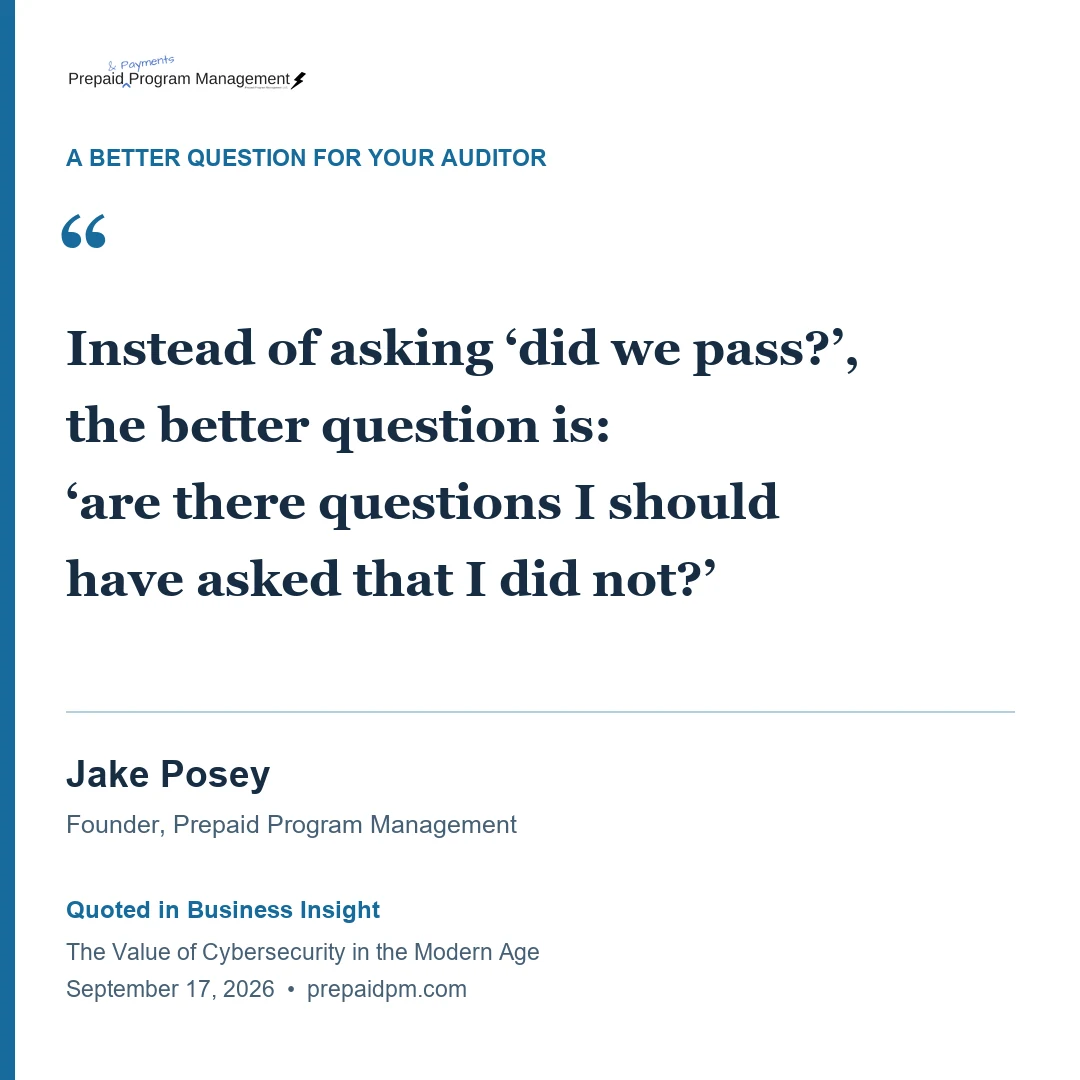
Jake Posey, founder of Prepaid Program Management, quoted in Business Insight, September 17, 2026.
Ask your auditor what you have overlooked and which area deserves attention next. For each issue, name the person responsible for correcting it, set a due date, and decide what evidence will show that the correction worked.
Build audit readiness a little at a time
In the interview, I also discussed year-round mini-audits: focused checks of a small part of your program. You do not need to repeat the entire annual audit every month.
Start with something that caused trouble in your last audit or a process that recently changed. My Mini Audit Ideas for Your Prepaid Program article gives you other places to start, including complaints, fees, and marketing approvals. Start small after your first issuing-bank audit, then increase the frequency as your team develops the habit. Mini-audits supplement the independent audits your program requires.
Your team follows your example
Employees notice the exceptions leaders make for themselves. If a deadline repeatedly overrides a security procedure, the team learns which priority wins.
Give employees a clear way to report a concern. When an audit exposes a weakness, assign the correction and follow up. If the same issue returns at the next audit, find out why the earlier fix did not hold.
At PPM, I help fintech founders work through bank due diligence, card-program implementation, and post-launch operations. If audit preparation keeps exposing unclear responsibilities, schedule a consulting call to discuss how to get your program organized.
